


CNBC’s Jim Cramer Predicted SpaceX IPO Would Double to $4 Trillion. Here Is What Actually Happened.
CNBC’s Jim Cramer Predicted SpaceX IPO Would Double to $4 Trillion. Here Is What Actually Happened.
Thomas Richmond Sat, July 25, 2026 at 7:31 PM UTC
0
Tulane Public Relations/Wikimedia CommonsQuick Read -
Goldman Sachs (GS) leads SpaceX's underwriting while Morgan Stanley (MS) handles retail, splitting an $800 million to $1 billion fee pool.
Cramer warns a tiny float and forced index-fund demand could spike SpaceX to $4 trillion, then strand retail buyers once lock-ups unwind.
Cerebras opened at $350 and now trades at $218, the cautionary pattern Cramer says could repeat when SpaceX lock-ups expire and index buying ends.
Act now: the analyst who called NVIDIA in 2010 just named his top 10 AI stocks — and Morgan Stanley didn't make the cut. Grab the names FREE today.
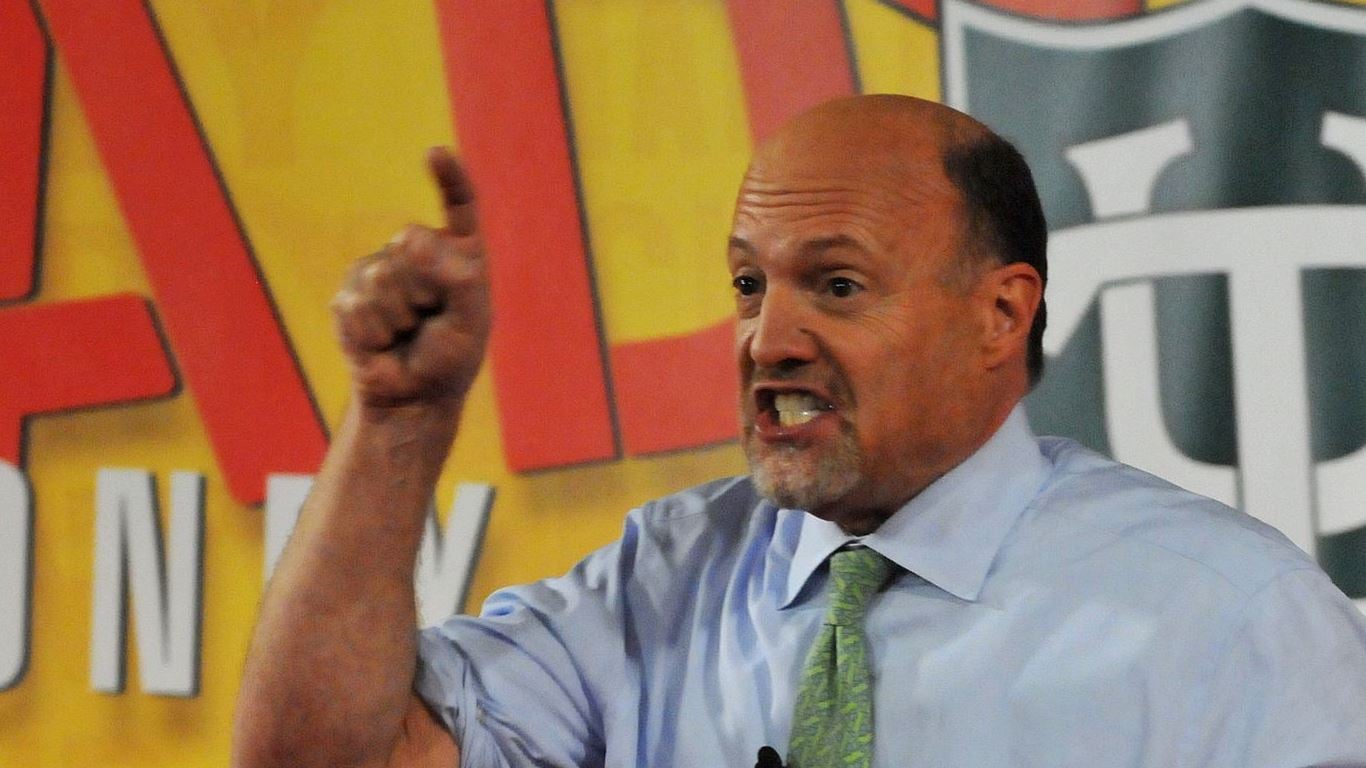
CNBC's Jim Cramer made a paradoxical call on the SpaceX IPO in early June 2026. On Squawk on the Street, he predicted the stock could double on its opening trade to a $4 trillion valuation, while simultaneously trying to talk retail investors out of buying. The mechanics he pointed to (a microscopic float and forced index-fund demand) were the same mechanics he warned could trap anyone chasing the pop. Now that the IPO has occurred, the results offer a useful reality check on both the prediction and the warning.
The biggest beneficiaries of this IPO sit on Wall Street. Goldman Sachs (NYSE:GS | GS Price Prediction) secured the primary underwriter role, while Morgan Stanley (NYSE:MS) handled the retail allocation Cramer was focused on. Space Exploration Technologies (NASDAQ:SPCX) began trading on June 12, 2026, completing the largest IPO in market history.
The Fixed-Price Setup
Elon Musk opted for an unusual structure: a fixed offer price of $135 per share rather than a traditional price range. That pricing implied a $1.77 trillion valuation and set the stage for Cramer's concern. With no book-building range to signal demand, all price discovery shifted to the opening trade. SpaceX initially targeted raising $75 billion through the sale of approximately 556 million shares. After strong investor demand, underwriters exercised their overallotment option, pushing total proceeds to $85.7 billion.
Act now: the analyst who called NVIDIA in 2010 just named his top 10 AI stocks — and Morgan Stanley didn't make the cut. Grab the names FREE today.
Factor One: The Tiny Float
The SpaceX S-1 confirms the lock-up architecture Cramer pointed to. Per the filing, the Founder and certain significant investors agreed with the underwriters that during a period of 366 days after the date of the prospectus, an aggregate of shares owned by them (including 100% of the shares owned by the Founder) are restricted. Most other holders face a 180-day lock-up, with releases controlled by Goldman Sachs and Co. LLC on behalf of the underwriters.
This structure meant very little stock was tradable on day one. Scarce supply meeting eager demand can violently spike the price, and that is exactly what Cramer was worried about: retail investors buying into an artificially elevated open price, then watching the stock drift lower as the float gradually expands.
Factor Two: Forced Index-Fund Demand
Once a company this large lists and qualifies for major indexes, passive funds tracking those benchmarks must buy. They are price-insensitive by design. Layer that mechanical bid on top of a tiny float and you get the conditions Cramer was describing. As he put it on air: "I am trying to influence Morgan Stanley, which has got the retail part to say to discourage their people from putting in market orders because they may get the stock to $4 trillion just by their own."
Cramer's Warning: The Cerebras Parallel
Cramer's deeper concern was what happens after the pop, and he invoked Cerebras as a cautionary template. Cerebras Systems (NASDAQ:CBRS) priced at $185 on May 13, 2026, opened at $350 on its debut, and briefly traded as high as $386 before closing at $311. That 68% first-day pop drew in buyers who then watched the stock pull back substantially. By late July 2026, Cerebras was trading around $182 per share, roughly 41% below the opening-day price of $350, illustrating precisely the dynamic Cramer warned about.
Advertisement
His verdict on SpaceX before the debut: "It could be very much like 1999, where they opened it at 4 trillion and then walked it down. If you look at Cerebras, that is a disaster. Everybody who bought Cerebras between 320 and 360, well, they are not ever going to buy another stock." He was also candid about his own wager: "SpaceX doubles at the opening, as I think it will. I have it on DraftKings. I am looking good."
What Actually Happened on IPO Day
Cramer's $4 trillion prediction did not materialize. SpaceX opened at $150 on June 12, 2026, representing an 11% gain over the $135 offer price rather than the 100% pop Cramer had envisioned. The stock climbed to a session high of $168.75 (a 25% gain from the offer price), valuing SpaceX at roughly $2.21 trillion at the peak. It closed the first day at $160.95, a 19% gain over the offer price, for a market cap of approximately $2.1 trillion. In the weeks that followed, SPCX pushed higher, reaching an intraday high of $225.64 on June 16 before pulling back. By late June, shares had retreated to around $153, still above the offer price but well below the post-IPO peak.
The outcome validated part of Cramer's framework (a meaningful first-day pop from a thin float) without the extreme magnitude he predicted. Investors who placed market orders at the open paid $150 per share, a 11% premium to the offer. Those who chased the intraday high at $168.75 saw their positions decline significantly in subsequent weeks.
What It Means for GS and MS
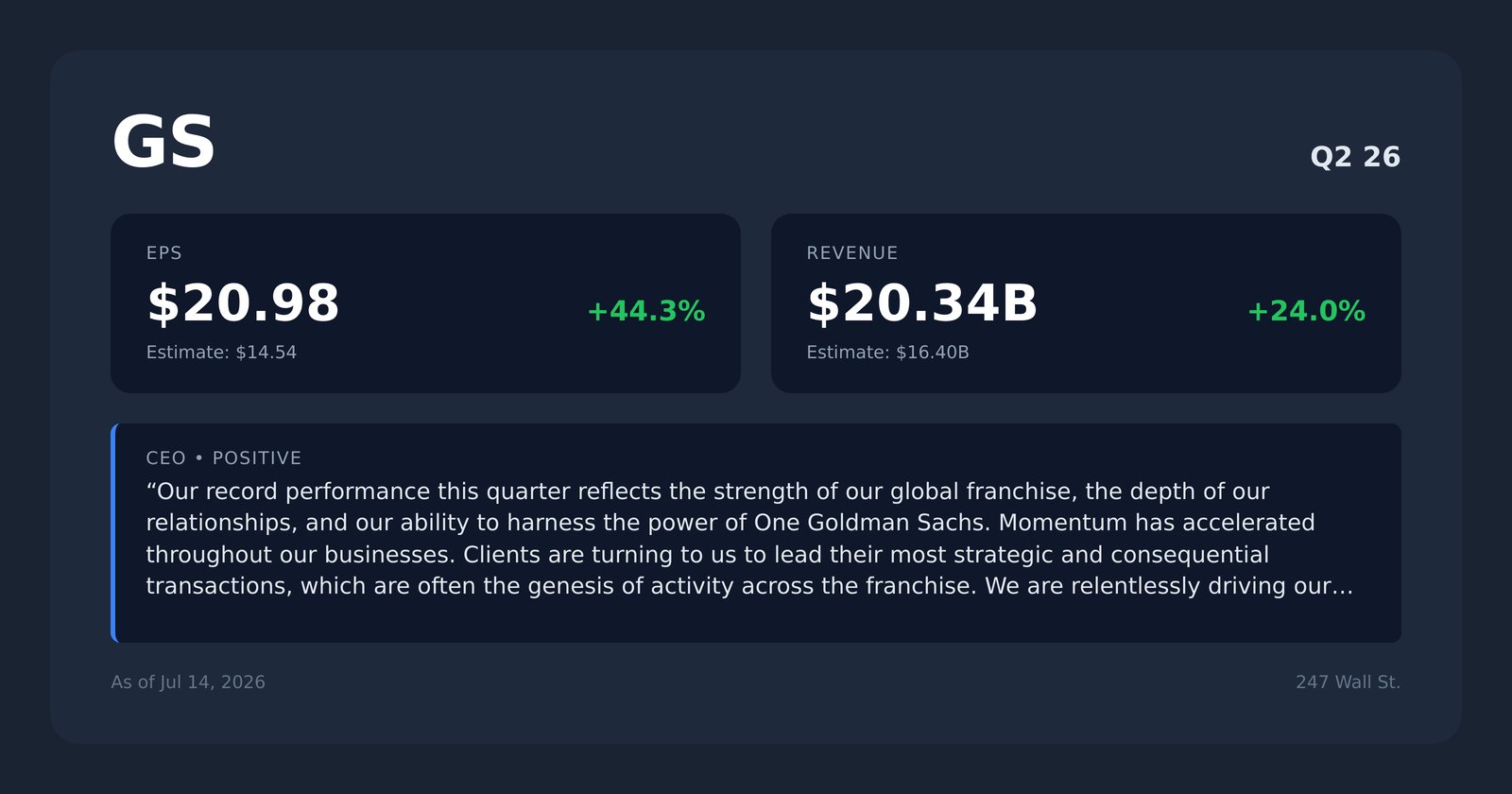
Goldman entered 2026 from a position of momentum, and its Q1 2026 results confirmed the firm had significant tailwinds heading into the SpaceX deal. Revenue climbed 14% year over year to $17.23 billion for the quarter, while investment banking fees surged 48% to $2.84 billion on a wave of completed M&A transactions and stronger equity underwriting. EPS of $17.55 marked the firm's second-highest quarterly result ever. Shares are up roughly 21% year to date, and a SpaceX fee pool estimated at $800 million to over $1 billion spread across 22-plus banks would have amplified Goldman's lead position heading into the second half of the year.
GS Earnings Quotes — 24/7 Wall St.
Morgan Stanley handled the retail distribution side Cramer focused on, and its financial trajectory reinforces why the bank coveted that role. Q2 2026 results, reported July 15, showed net revenues of $21.3 billion, EPS of $3.46, and ROTCE of 26.6%, all records for the firm. That followed an already-record Q1 2026, which produced revenues of $20.6 billion, EPS of $3.43, and ROTCE of 27.1%. Wolfe Research separately flagged a wealth management tailwind from Shareworks stock plan administration, securities lending, and the conversion of SpaceX employees into advisory clients, a dynamic that should compound over time as SPCX lock-ups unwind.
The Takeaway
Cramer's framework was a warning dressed as a prediction. The tiny float and forced index demand produced a real first-day pop, just not a $4 trillion one. The more durable lesson from the SpaceX debut is that Cramer's underlying concern proved correct: investors who placed market orders at the opening trade paid a meaningful premium to the offer price, and those who chased the session or post-IPO highs have since seen losses. SpaceX's long-term value hinges on the execution of Starlink growth (Starlink generated $11.4 billion in revenue in 2025, about 61% of total company revenue) and years-away Starship integration. For everyday investors, the practical lesson from the IPO season of 2026 is the same one Cramer delivered: avoid market orders on a mega-cap IPO debut.
Editor's note: This article has been to reflect post-IPO outcomes. SpaceX (SPCX) opened at $150 and closed its first trading day at $160.95 on June 12, 2026, short of Cramer's $4 trillion prediction, while total proceeds reached $85.7 billion after the overallotment option was exercised. Goldman Sachs Q1 2026 data (revenue $17.23 billion, IB fees $2.84 billion, EPS $17.55) and Morgan Stanley Q2 2026 results ($21.3 billion revenue, EPS $3.46) have replaced the earlier quarterly figures. The Cerebras current share price has been to approximately $182, reflecting its decline from the $311 first-day close.
Act now: the analyst who called NVIDIA in 2010 just named his top 10 AI stocks — and Morgan Stanley didn't make the cut. Grab the names FREE today.
Contact editorial@247wallst.com for any questions or corrections.
Source: “AOL Money”
