


Meet Cleopatra, the 30-Year-Old Archeologist with a Historic Name Who Unravels Our Greatest Mysteries, from Pompeii to Atlantis (Exclusive)
Meet Cleopatra, the 30-Year-Old Archeologist with a Historic Name Who Unravels Our Greatest Mysteries, from Pompeii to Atlantis (Exclusive)

Jordan GreeneFri, October 9, 2026 at 4:26 PM UTC
0
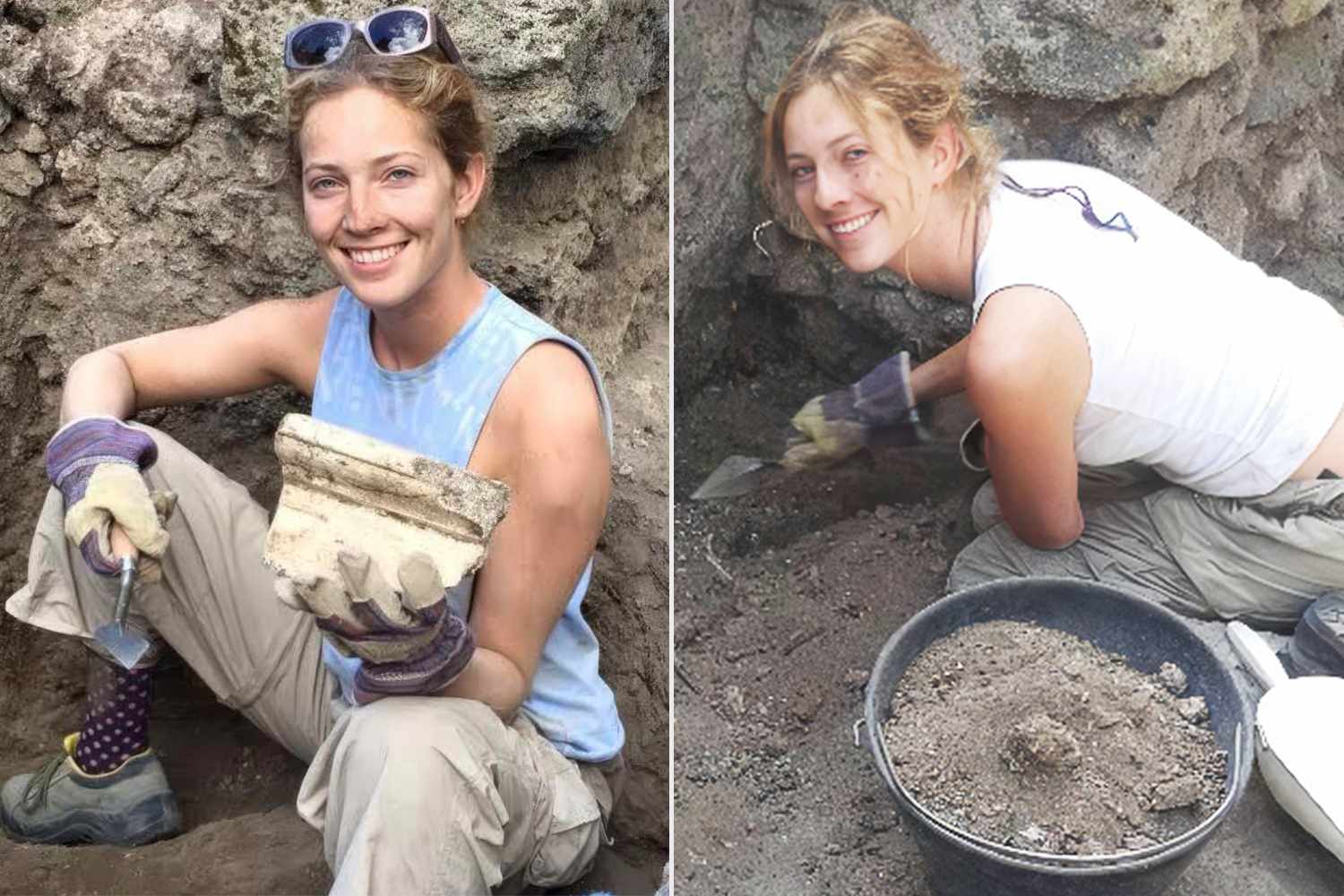
Cleopatra Lawrence while on a dig.Credit: Cleopatra LawrenceCleopatra Lawrence grew up answering questions about her famous namesake, the first-century B.C. Egyptian queen -
Cleopatra Lawrence grew up answering questions about her famous namesake, the first-century B.C. Egyptian queen
Her early curiosity about Cleopatra and Egypt grew into a lifelong fascination with the ancient world, eventually leading her to study archaeology at Oxford University
Now, she works on digs in places like Pompeii and unravels history’s greatest mysteries, such as if Atlantis really exists, on social media for hundreds of thousands of followers
Cleopatra Lawrence’s fascination with ancient Egypt began, fittingly, with her own name.
Growing up in London, England, Lawrence grew used to answering questions about her famous namesake, the first-century B.C. Egyptian queen. But what began as curiosity about Cleopatra soon blossomed into a full-fledged obsession. After noticing her growing interest, Lawrence’s parents gave her a copy of Egyptology, a children’s book filled with pop-up maps of lost treasures and illustrations of mummies like Tutankhamun and Nefertiti.
The book opened up a world she couldn’t get enough of.
“I was hooked,” Lawrence, 30, tells PEOPLE exclusively. “That obsession never really went away.”
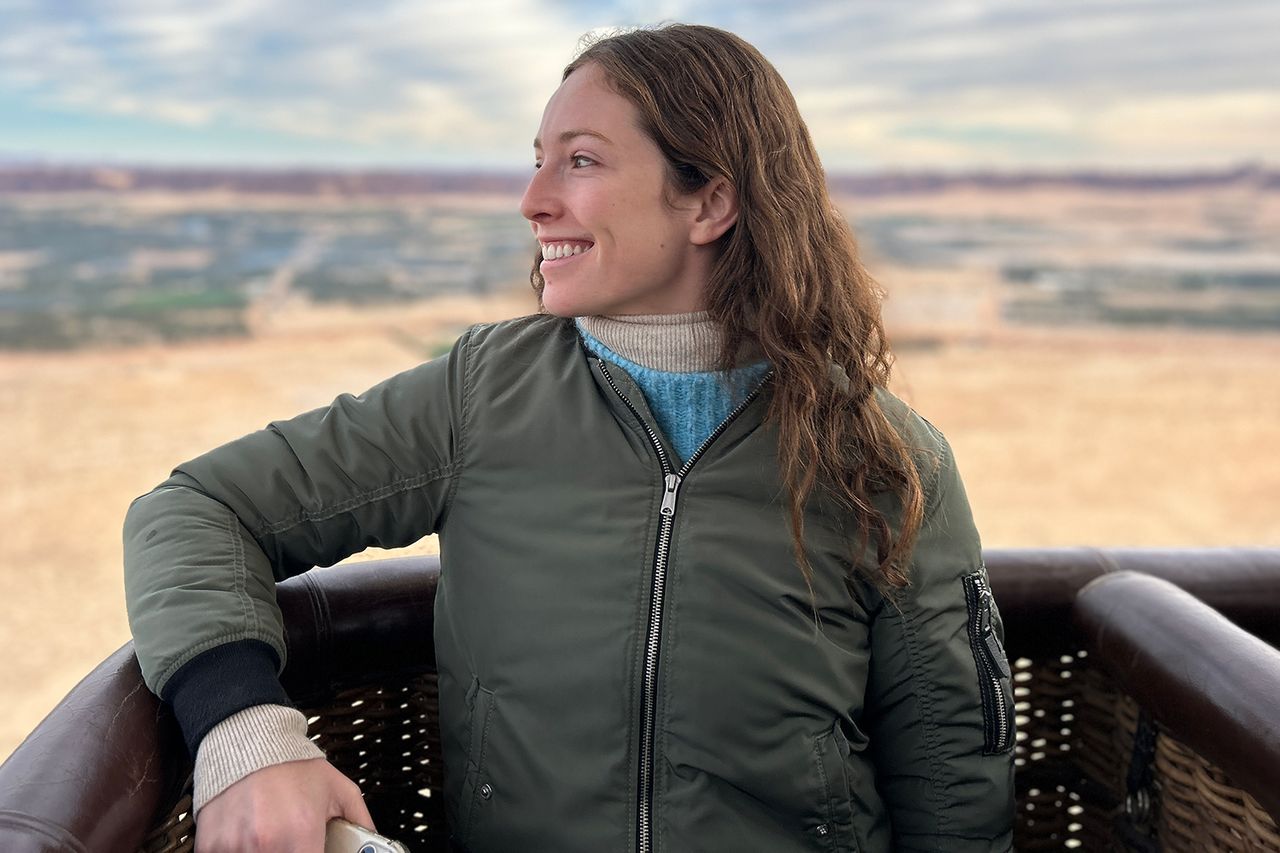
Credit: Cleopatra Lawrence
Her childhood fascination expanded into a passion for ancient history across the world, eventually leading her to study archaeology at Oxford University. There, she discovered that uncovering the past could be every bit as thrilling as reading about it.
Lawrence still remembers her first excavation, at a Roman site in Dorchester, in the English countryside near Oxford. At 19, she joined 24 fellow students for two weeks of digging during a summer heatwave. Each morning, the group woke at 6:30 a.m., walked from their campsite to the excavation site and spent the day working in the trenches.
Despite the sweltering conditions and the dirt covering her from head to toe, Lawrence remembers the experience as “two weeks of complete magic.”
“There was something about all of us doing it together, working with our hands all day, slowly and meticulously uncovering these ruins, that was completely meditative,” she says.
Her first discovery was a collection of glass beads, an unassuming find that nevertheless offered a glimpse into the lives of people who had lived thousands of years earlier.
“I remember imagining how they might have been worn, all that time ago,” she says. “It’s hard to describe coming face to face with something that hasn’t seen daylight since someone last held it 2,000 years ago.”
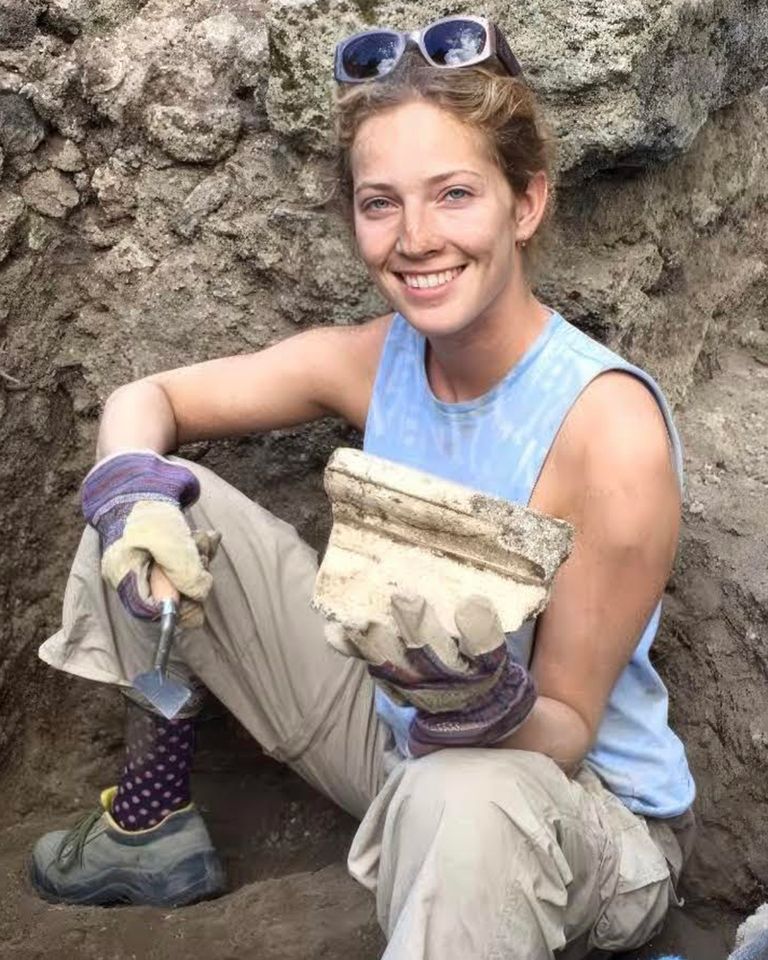
Cleopatra Lawrence while on a site dig.Credit: Cleopatra Lawrence
But Lawrence’s most significant discovery was still ahead of her in Pompeii.
While working with Oxford at the ancient city’s Republican Baths during a trip to Naples, Italy, Lawrence found herself surrounded by traces of everyday life nearly 2,000 years earlier. She noticed grooves worn into paving stones by wagon wheels, stepping stones that allowed pedestrians to cross without getting their feet dirty and fountains where residents once collected water.
“Working there every day, I became completely immersed in the place, it felt less like studying history and more like living it,” she says.
Amid those remnants of daily life, Lawrence unearthed a seemingly ordinary fragment of pottery. She had no idea at the time what the small piece signified.
After returning to Oxford at the end of the summer, Lawrence was approached by her professor, who asked her a question she wasn’t expecting.
“Do you realize what you found?” she recalls them asking.
The pottery fragment, she learned, bore a letter from the Nucerian alphabet, an exceptionally rare local script that, according to Lawrence, had never before been found in Pompeii.
Dating to the sixth century B.C., the fragment offered a glimpse into the city’s early history, centuries before it became known as a Roman settlement. Archaeologists have long debated Pompeii’s origins, including the roles played by the Etruscans, Greek settlers and local populations influenced by nearby Greek colonies.
Advertisement
According to Lawrence, her discovery provided early evidence of a local language being used in Pompeii, strengthening the argument that local populations played a role in the city’s founding.
“My professor called it the most important find at Pompeii of the decade,” she says.
“I think about it often — not just because of its importance, but because it was so small,” she adds. “A tiny sherd that could easily have been tossed aside if someone hadn’t cleaned it carefully and checked it for markings.”
Take PEOPLE with you! Subscribe to PEOPLE magazine to get the latest details on celebrity news, exclusive royal updates, how-it-happened true crime stories and more — right to your mailbox.
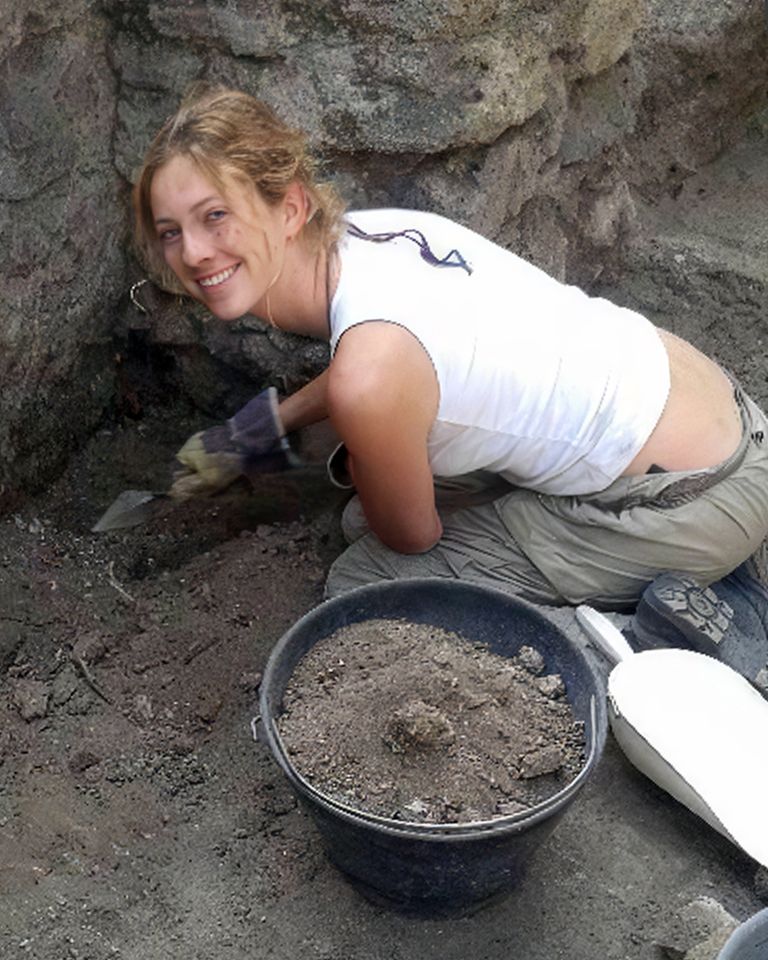
Cleopatra Lawrence digging.Credit: Cleopatra Lawrence
Today, Lawrence lives in Portugal, where she works as a documentary maker and runs Cleopatra Digs It, a social media channel dedicated to the mysteries of the ancient world, heritage and travel. Through Instagram, TikTok and YouTube, she shares the stories behind archaeological discoveries, bringing the past to life for a new audience numbering more than 320,000 across the three platforms.
Rather than simply explaining what archaeologists uncover, Lawrence wants to show people what those discoveries reveal about the lives of those who came before us. She also relates the past to popular myths and stories to show how even the mystery of Atlantis might be rooted in fact.
In one video, she addressed Atlantis, explaining how the myth may have been inspired by a real ancient Greek city. Lawrence recounted how archaeologist Dora Katsonopoulou helped uncover the story of Helike, a city that disappeared beneath the water after a devastating earthquake in 373 B.C.
“This ancient Greek city of Helike vanished underwater overnight when an earthquake caused the ground to turn to liquid, a real phenomenon called soil liquefaction. Then came the tsunami, and an underwater metropolis was created,” Lawrence explained to her followers.
“But here’s the thing: The myth of Atlantis comes from the philosopher Plato, who wrote about a lost utopian civilization that sank into the ocean after angering the gods. Plato wrote about Atlantis just 13 years after the Helike disaster. Many believe that this is what inspired Plato’s Atlantis,” she added.
“Ancient Greeks and Romans used to sail the underwater ruins of Helike as tourists, Plato may have even sailed over the ruins himself,” she continued.
In another video, Lawrence addressed claims that a team had discovered Noah’s Ark in the mountains of Turkey after drilling approximately 60 feet into the ground.
The researchers believe they may have found decayed wood at the site, reigniting speculation about whether the biblical vessel could have survived for thousands of years. Lawrence also offered a closer look at the story’s historical and biblical context, pointing out that the Book of Genesis refers to the “mountains of Ararat” in the plural rather than identifying a single mountain as the ark’s resting place.
She covers a great range of topics, but there is a winning theory that she follows.
“What I’ve learned is that people are most drawn to the stories that show how little we’ve changed,” she says.
“Whether it’s 50 or 5,000 years ago, people fell in love, gossiped, worried about money and complained about their neighbors, and I think there’s something very comforting in that.”
While Lawrence has already uncovered a discovery that helped shed light on Pompeii’s early history, there’s still one ancient mystery she hopes to solve.
Asked what remains at the top of her archaeology bucket list — whether it’s a site she’d love to excavate or a mystery she’d love to solve — Lawrence doesn’t hesitate.
“It’s got to be the tomb of Cleopatra,” she says. “I’m holding out hope that one day, with some improved form of scanning technology… we’ll find her!”
on People
Source: “AOL Entertainment”
