


Rare Amber Pendant with Queen Elizabeth I Portrait Expected to be Auctioned for 20 Times the Price it Was Originally Sold For
Rare Amber Pendant with Queen Elizabeth I Portrait Expected to be Auctioned for 20 Times the Price it Was Originally Sold For

Madison E. GoldbergThu, July 2, 2026 at 4:37 AM UTC
0
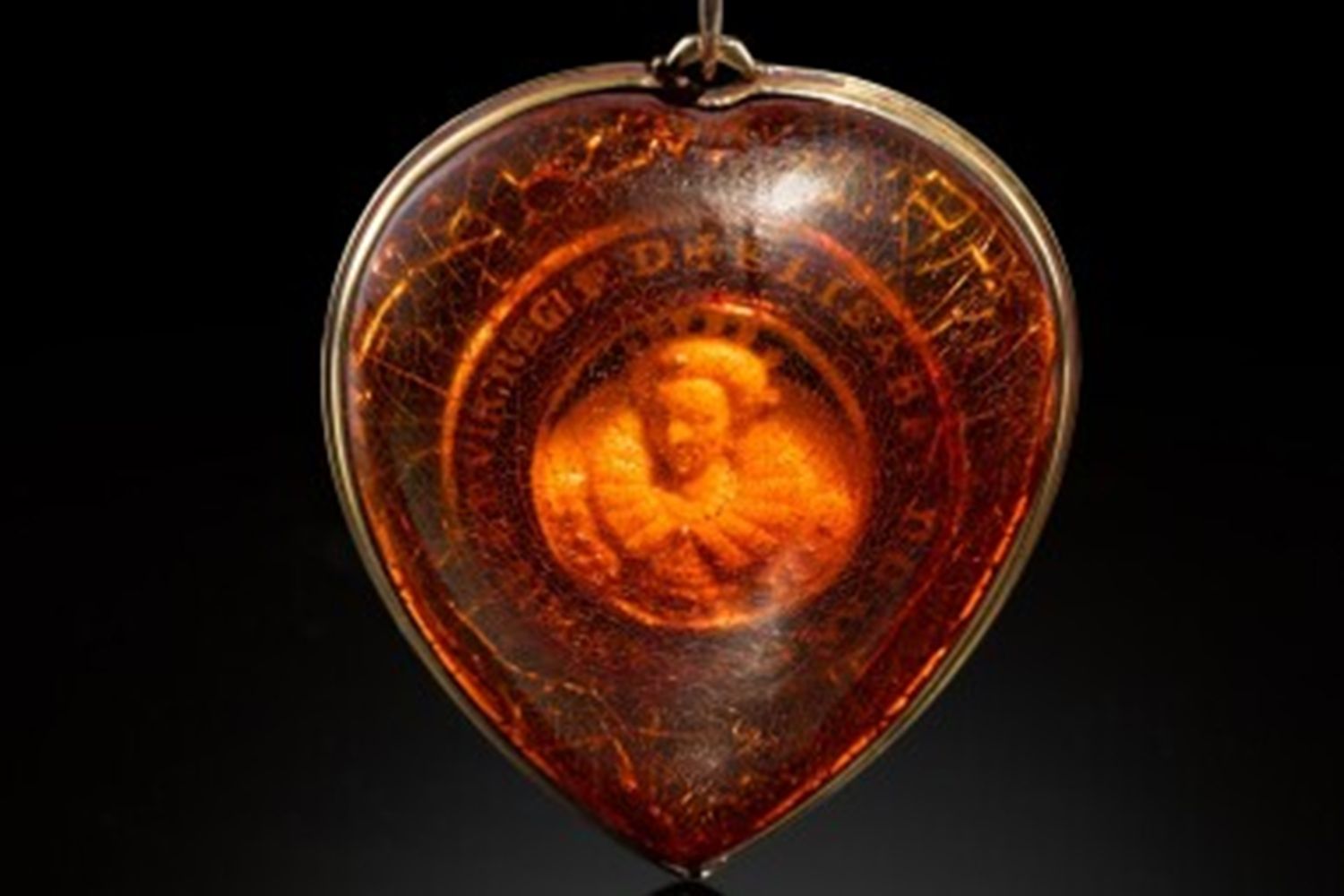
Amber pendant featuring carving of Queen Elizabeth ICredit: sotheby's -
An amber pendant, made circa 1600, features a carving of Queen Elizabeth I and a parrot symbolizing her virginity
Originally sold for £5,588 in 2025, it is now expected to fetch up to £150,000 at Sotheby's auction
The piece was likely a royal gift and crafted from amber, valued for its protective and symbolic properties in the era
A rare amber pendant that features a Tudor-era portrait of Queen Elizabeth I of England is expected to fetch 20 times the price it was previously auctioned off for during a new auction in July.
The heart-shaped amber pendant, which is believed to have been made circa 1600, includes a cameo-style carving of the late Elizabeth I on one side, with a parrot on the other. It is currently unknown who commissioned it to be made, but it could have been the queen herself. The intricately carved authentic piece was originally sold for £5,588, or about $7,350, in November 2025 at an auction in Edinburgh, Scotland, Smithsonian Magazine reports. It is now expected to sell for between £100,000 and £150,000 (about $133,000 to $199,000) at a new auction held by Sotheby's.
The cameo carving of Elizabeth I in white amber is believed to be based on the "widely circulated" engraving by Crispijn de Passe the Elder, which was based on a portrait drawn from life by Isaac Oliver from circa 1590–1592, per Sotheby's.
The pendant also includes the words ‘Elisabet.D.G.Ang.Fran.Hib.Et.Vir.Regi.F.D' (Elizabeth by the Grace of God Queen of England, France, and Ireland) engraved on its surface, according to Lyon & Turnbull's 2025 listing. The item measures 4 cm high, and 3 cm wide (under two inches in height and width).
“The extraordinary level of detail, the crispness of the carved surface and the delicacy of its framing border point to a virtuoso technique,” leads experts to believe that it was made by either Hans Klingenberg or Georg Schreiber of Prussia, according to Sotheby's.
Per Lyon & Turnbull, the pendant was sourced from "the former contents of Poltalloch House, Kilmartin, Argyll." Dated to approximately 1600, the pendant later came into the possession of the Malcolm family, almost three centuries after the queen's death in 1603. Sotheby's called John Malcolm, 1st Baron Malcolm of Poltalloch, "one of Britain's most important 19th-century collectors."
Advertisement
“This gold mounted amber pendant is an extraordinarily rare emblem of Queen Elizabeth's sovereignty and is likely a gift from her own hand," Antiques Roadshow host and historian Geoffrey Munn, OBE, said in a statement, according to Sotheby's.
Munn added that the pendant's "heart shaped profile echoes her insistence that she was married only to the Kingdom of England."
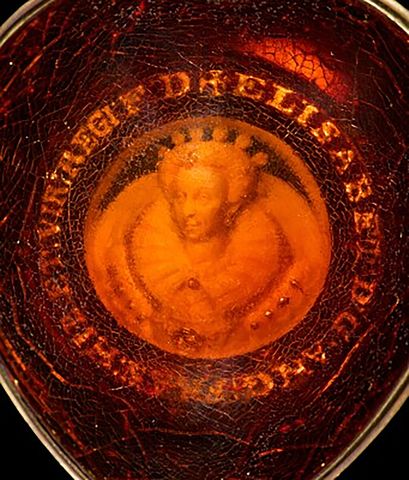
Amber pendant bearing white amber carving of Queen Elizabeth ICredit: sotheby's
"In later life her celibate status became increasingly part of her elaborate stage management and the seemingly arbitrary parrot on the reverse is in fact a subliminal emblem of her virginity," Munn added.
— sign up for PEOPLE's free daily newsletter to stay up-to-date on the best of what PEOPLE has to offer, from celebrity news to compelling human interest stories.
The pendant was made of amber likely because the material "held a powerful allure in the late sixteenth and early seventeenth centuries," per Sotheby's. Some believed it to be "beneficial to the body" and that it could emit a specific scent indicating danger or poison, proving especially valuable to the royal family and other nobility of the era.
Queen Elizabeth I, who ruled England and Ireland from 1558 until her death at 69 in 1603, famously chose to never marry during her reign, and thus birthed no heirs to the throne, marking the conclusion of the Tudor period. The throne of England passed to King James VI, the son of Elizabeth's cousin, Mary Queen of Scots, following her death.
on People
Source: “AOL Entertainment”
